
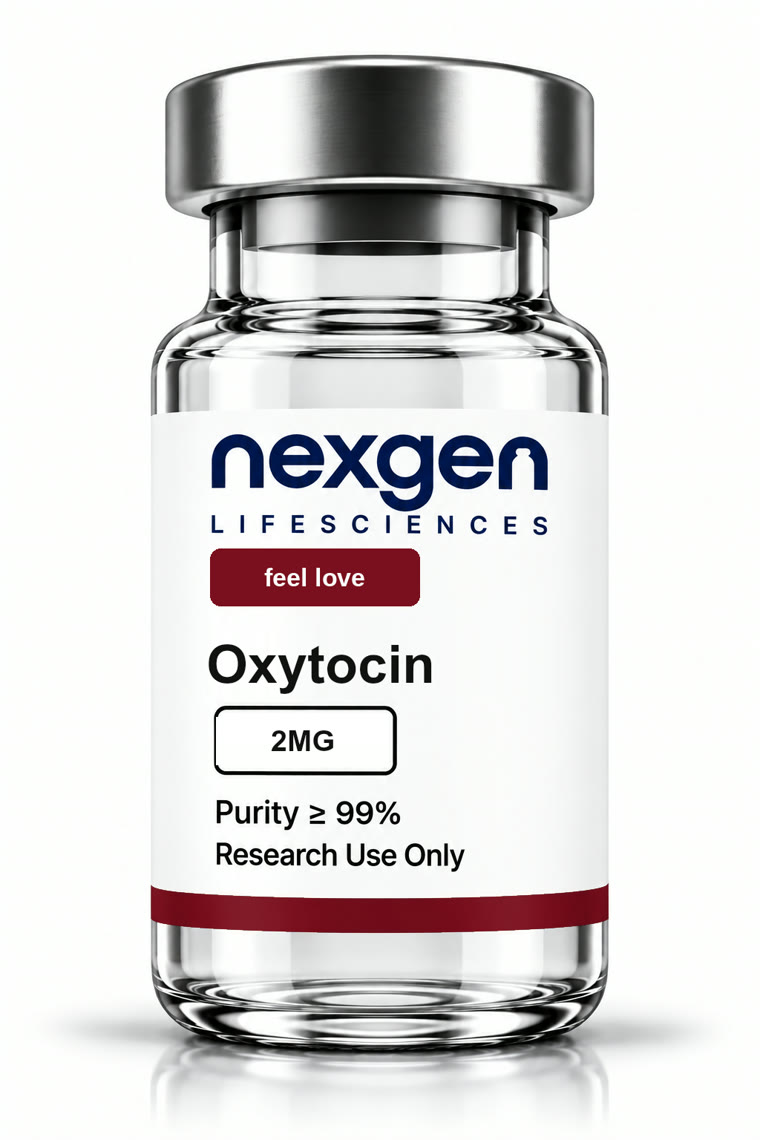
Oxytocin
Proven medicine for the body. For the social brain, the effects are real but far messier than the "trust hormone" headlines.
- Evidence
- AApproved what's this?
Grade A for obstetric use. Grade B but inconsistent and context-dependent for social effects. - Also known as
- Pitocin · Syntocinon · "the bonding hormone"
- Class
- Natural nonapeptide hormone; oxytocin-receptor agonist. Approved in obstetrics.
What it is
Oxytocin has two lives. In hospitals (Pitocin, Syntocinon) it induces labour, controls bleeding after birth and triggers milk let-down, and those effects aren’t in doubt. In the community it’s a nasal spray for trust, bonding and calm, and that’s where the science gets complicated. In India, retail sale is tightly restricted to curb misuse.
How it works
What the research shows
The landmark: a single 24 IU nasal dose increased trusting behaviour in an economic game (Kosfeld, Nature 2005)1. Since then: hundreds of studies show the effects are inconsistent and context-dependent. Sex, attachment style and personality change the response. It can raise trust toward an in-group while increasing defensiveness toward outsiders. In people with borderline traits it can reduce trust. The field has faced replication and statistical-power problems2,3. Trials in autism, social anxiety, schizophrenia and PTSD have been mixed. In animals: clear, consistent effects on bonding and parenting.
Evidence at a glance
| Use | Grade | Best evidence | Main gap | Read |
|---|---|---|---|---|
| Obstetric | AApproved | Uterine contraction, let-down | — | Proven medicine |
| Trust and bonding | BHuman trials | Raised trust in a game1 | Context-dependent; replication3 | Real but unreliable |
| Social anxiety, stress | BHuman trials | Dampens social threat response | Inconsistent | Mixed |
| Autism and other conditions | BHuman trials | Mixed trial results | Not approved | Unproven |
Dosing: what has been reported
| Setting | Figure | Route | Grade |
|---|---|---|---|
| Approved (obstetric) | IV milliunits/min titrated, or IM after birth, under supervision | IV / IM | A |
| Research (social) | 24 IU about 45 min before the situation; studies range 1–48 IU1,2 | Intranasal | B |
| Community | 10–40 IU (usually 24 IU), as needed, 30–45 min before | Intranasal | D |
| Community, other | Sublingual troches or lower-dose injection (mainly peripheral effect) | SL / SC | D |
More isn’t better. Higher doses spill onto vasopressin receptors and can flip the effect. Social effects appear within 30–60 minutes and last a couple of hours.
Preparing & storing
Oxytocin is fragile. Keep sprays and injectables refrigerated, away from heat and light, and don’t shake them.
Reported side effects
- Mild nasal irritation; occasional headache
- Emotional shifts: some people feel teary, anxious or defensive rather than calm
- Uterine contractions at systemic doses
- Water retention and low sodium (high-dose, obstetric)
The main thing to watch is whether the effect is actually positive for you.
Who should avoid it
- Pregnancy outside supervised obstetric care: risk of miscarriage or preterm labour
- Breastfeeding: triggers let-down, so get medical input
- Borderline personality traits: may get the opposite effect
- Cardiovascular conditions (systemic doses); psychiatric medication
Regulatory status checked Oct 2026
| Body | Status | Detail |
|---|---|---|
| FDA (US) | Approved (obstetrics) | Pitocin; social and nasal use is off-label. |
| EMA (EU) | Approved (obstetrics) | — |
| CDSCO (India) | Approved, tightly restricted | Retail sale heavily curtailed. |
| WADA | Not prohibited | Permitted in sport. |
Real, personal and unpredictable
Oxytocin’s physical actions are proven medicine. Its social effects exist, but they depend heavily on who you are and where you are, so pay attention to how it actually affects you. Avoid it entirely in pregnancy.
References
- Kosfeld M, Heinrichs M, Zak PJ, Fischbacher U, Fehr E. Oxytocin increases trust in humans. Nature. 2005;435(7042):673–676.
- Dose-response effects of exogenous oxytocin on social cognition: a systematic review. Neurosci Biobehav Rev. 2025. (75 studies, 1–48 IU.)
- Intranasal oxytocin effects on social cognition: a critique. PMC4021009