
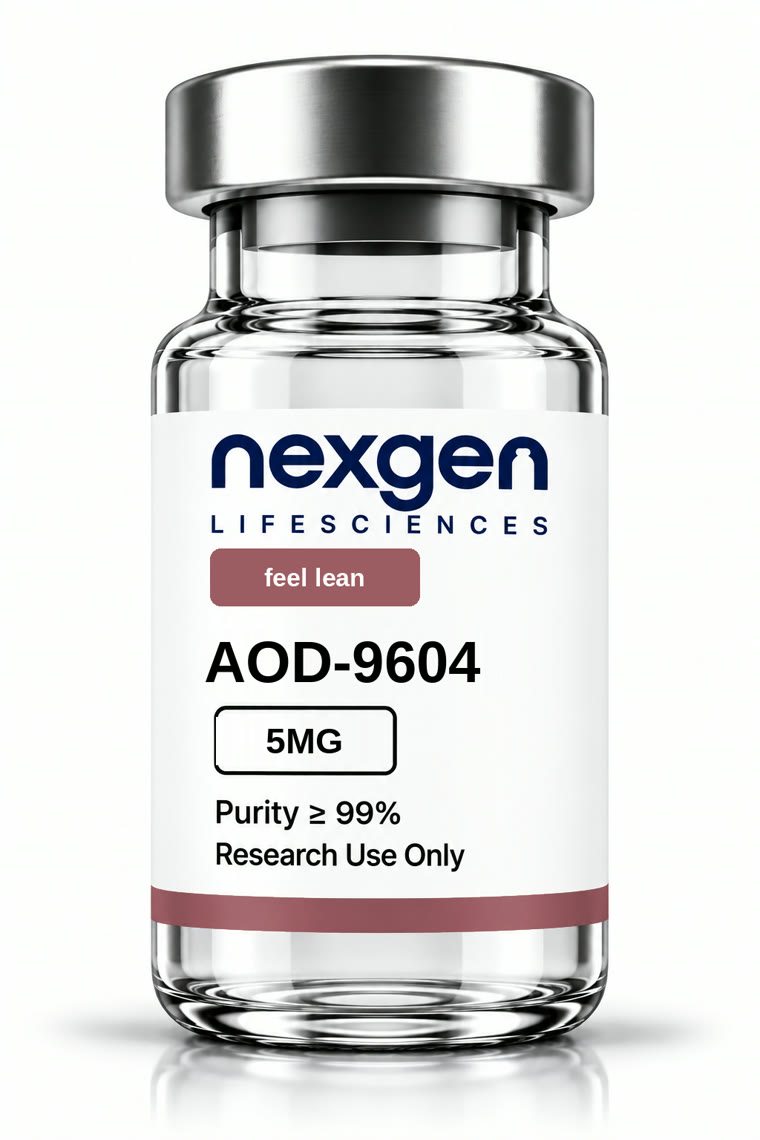
AOD-9604
The fat-burning tail of growth hormone, without the rest. Very safe in people, and unproven for weight loss.
- Evidence
- BHuman trials what's this?
Grade B for safety (six RCTs, ~900 people). Its pivotal weight-loss trial was negative. - Also known as
- Anti-Obesity Drug 9604 · Tyr-hGH(177–191)
- Class
- Synthetic 16-amino-acid fragment from the C-terminal end of human growth hormone
What it is
Growth hormone does many things, and one of them is breaking down fat. In the 1990s researchers at Monash University isolated the part of GH responsible for that, residues 177–191, and added a tyrosine for stability. The goal was fat loss without GH’s effects on IGF-1, tissue growth or blood sugar. Metabolic Pharmaceuticals took it through a full human obesity programme.
How it works
What the research shows
In people. Six randomised, placebo-controlled trials ran between 2001 and 2006 with about 900 adults, more human testing than most compounds in this guide will ever get3. An early Phase 2 study reported about 2 kg more weight loss than placebo over 12 weeks. The larger Phase 2b trials used oral doses of 0.25–1 mg a day for 24 weeks. They didn’t produce meaningful weight loss over placebo, and in February 2007 the company ended obesity development4. Safety was another matter: side effects looked like placebo, with no IGF-1 rise, no glucose impairment and no antibodies3.
In animals. In obese mice both GH and the fragment reduced body fat, and work in β3-receptor knockout mice pointed to that receptor as part of the mechanism1,2. Genetically obese rodents turned out to be a poor guide to what happens in people.
Evidence at a glance
| Use | Grade | Best evidence | Main gap | Read |
|---|---|---|---|---|
| Weight loss | BHuman trials | Pivotal 24-week trial was negative4 | No efficacy shown | Unproven |
| Acute fat burning | BHuman trials | Single doses caused lipolysis in obese adults3 | Short-lived | Real but brief |
| Safety | BHuman trials | Like placebo; no IGF-1 or glucose effect3 | — | Clean |
| Joints / cartilage | ELab & animal | Explored after obesity programme | Thin human data | Speculative |
Dosing: what has been reported
| Setting | Figure | Route | Grade |
|---|---|---|---|
| Published human | IV single doses 25–400 mcg/kg; oral 0.25–1 mg daily for up to 24 weeks3 | IV / oral | B |
| Clinic off-label | About 300 mcg/day, compounded | Subcutaneous | C |
| Community | 250–500 mcg/day, often 5 days on and 2 off, in the morning before eating | Subcutaneous | D |
Community use is in the morning before eating, because insulin blunts fat breakdown. None of these schedules is backed by a positive efficacy trial.
Preparing & storing
AOD-9604 is hydrophobic and can stay cloudy in plain water. Start with bacteriostatic water. If gentle swirling doesn’t clear it, a dilute acetic-acid solvent usually will. Refrigerate once mixed and don’t shake it.
Reported side effects
- Injection-site redness, itch or a small lump
- Occasional early headache
- Uncommon mild fatigue or flushing
One of the cleanest human safety records in this guide: no serious adverse events were linked to it in the trials.
Who should avoid it
- Tested athletes: WADA prohibited as a GH fragment, and detectable5
- Pregnancy and breastfeeding (not studied)
- Active cancer: GH-related pathways warrant a doctor’s input
- Anyone expecting proven weight loss
Regulatory status checked Oct 2026
| Body | Status | Detail |
|---|---|---|
| FDA (US) | Not approved | Food-ingredient status has been contested; under compounding review. |
| EMA (EU) | Not approved | No marketing authorisation. |
| CDSCO (India) | Not approved | No approval identified. |
| WADA | Prohibited | Growth-hormone-fragment category, banned at all times. |
Very well tolerated, and the evidence doesn’t back the main claim
AOD-9604 has more human trial data than most peptides, and that data shows it is safe. The same data shows it did not produce meaningful weight loss. Use that to set expectations, and remember it is banned in tested sport.
References
- Ng FM, Sun J, Sharma L, et al. Metabolic studies of a synthetic lipolytic domain (AOD9604) of human growth hormone. Ann N Y Acad Sci. 2000;921:262–272. PMID 11146367
- Heffernan M, Summers RJ, Thorburn A, et al. Effects of hGH and AOD9604 on lipid metabolism in obese and β3-AR knockout mice. Endocrinology. 2001;142(12):5182–5189. PMID 11713213
- Stier H, Vos E, Kenley D. Safety and tolerability of the hexadecapeptide AOD9604 in humans. J Endocrinol Metab. 2013;3(1–2):7–15.
- Metabolic Pharmaceuticals. Phase 2B results for AOD9604 (obesity). ASX announcement, 21 February 2007.
- Cox HD, Eichner D, Bowers L, et al. Detection and in vitro metabolism of AOD9604. Drug Test Anal. 2015;7(9):808–814. PMID 25208511