
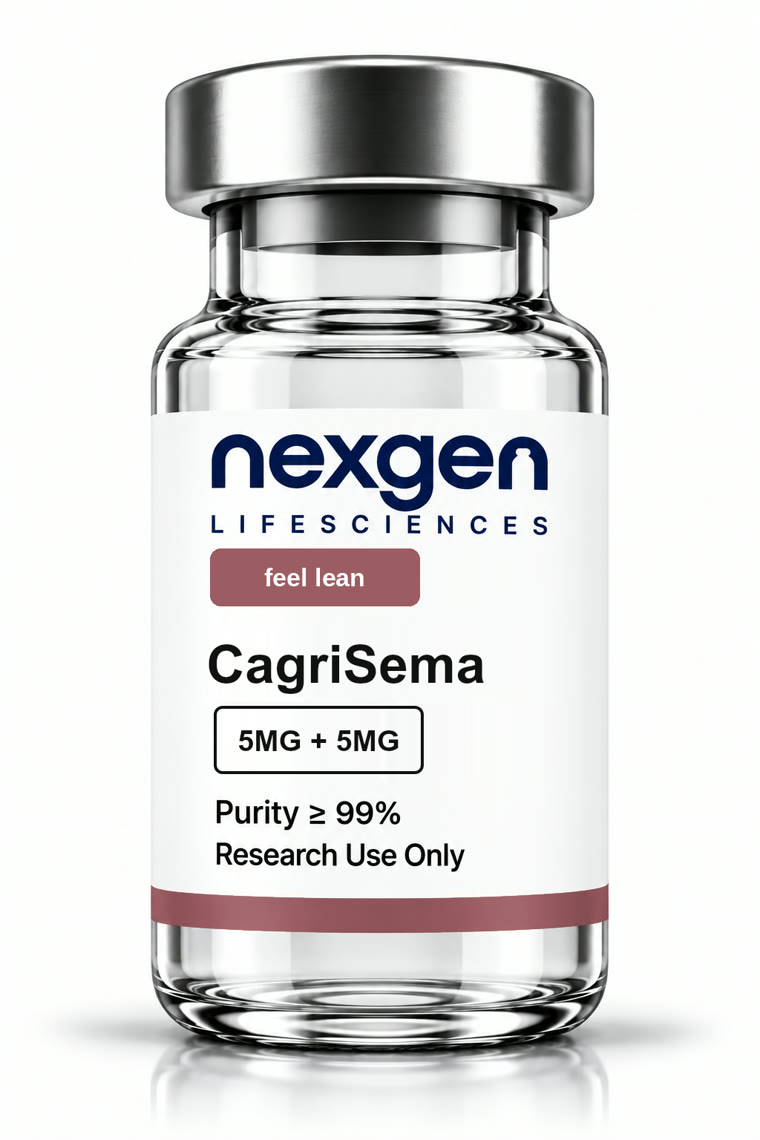
CagriSema
Two separate appetite brakes in one weekly injection, and the first GLP-1 plus amylin product to reach regulators.
- Evidence
- BHuman trials what's this?
Grade B. Completed Phase 3 programme; FDA decision expected late 2026. - Also known as
- Cagrilintide 2.4 mg + semaglutide 2.4 mg, fixed dose
- Class
- Investigational fixed-dose pharmaceutical combination (amylin + GLP-1). Novo Nordisk. Not a home stack.
What it is
The other two blends in this guide, GLOW and KLOW, are combinations of research peptides put together by the community. CagriSema is different: a finished pharmaceutical developed by Novo Nordisk and filed with the FDA in December 2025. It pairs the GLP-1 drug semaglutide with the amylin analogue cagrilintide in a single fixed-dose weekly injection. Full pharmacology for each half is in the Semaglutide (03) and Cagrilintide (04) chapters.
Why the two combine
What the research shows
REDEFINE 1 (68 weeks, more than 3,400 adults with obesity and no diabetes): about 20–23% weight loss depending on the analysis, against 16.1% for semaglutide alone, 11.8% for cagrilintide alone and 2.3% for placebo. About 92% of participants lost at least 5%1. Beating both halves is the key result: it shows the combination genuinely adds something.
REDEFINE 2 (type 2 diabetes): 15.7% vs 3.1% on placebo, a smaller figure as is typical in diabetes2. REDEFINE 4 (head to head): 23.0% vs 25.5% for tirzepatide, which missed its non-inferiority goal3.
Evidence at a glance
| Use | Grade | Best evidence | Main gap | Read |
|---|---|---|---|---|
| Weight loss | BHuman trials | ~20–23% at 68 weeks1 | Not yet approved | Strong |
| vs components | BHuman trials | Beat semaglutide and cagrilintide alone1 | — | Proves additivity |
| vs tirzepatide | BHuman trials | 23.0% vs 25.5%3 | Missed non-inferiority | Second best |
Dosing: what has been reported
| Setting | Figure | Route | Grade |
|---|---|---|---|
| Trial / forthcoming label | Both components raised together over ~16 weeks to 2.4 mg + 2.4 mg weekly | Subcutaneous | B |
It follows the same titration logic as semaglutide: increase only once side effects settle, hold or step back if they don’t, and support the climb with fibre, fluids and protein. It is supplied ready to use and isn’t meant to be mixed at home.
Reported side effects
- Nausea, vomiting, diarrhoea, constipation, possibly a little more than semaglutide alone
- Gallbladder problems with rapid weight loss
- Muscle loss without enough protein and training
- Rare: pancreatitis; semaglutide-class thyroid C-cell boxed warning
Who should avoid it
- Personal or family history of medullary thyroid cancer or MEN2
- History of pancreatitis
- Pregnancy
- Glucose-lowering medicines need adjusting
Regulatory status checked Oct 2026
| Body | Status | Detail |
|---|---|---|
| FDA (US) | Under review | Filed December 2025; decision expected late 2026. |
| EMA (EU) | Not approved | Not yet authorised. |
| CDSCO (India) | Not approved | Not available as a combination. |
| WADA | Not prohibited | GLP-1 and amylin analogues are not listed. |
Two brakes beat one
CagriSema is solid evidence that amylin adds to GLP-1. It is a regulated, fixed-dose medicine, not something to recreate by mixing two vials at home. Once it’s approved, it will sit just behind tirzepatide on raw weight loss.
References
- Cagrilintide–semaglutide in adults with overweight or obesity (REDEFINE 1). N Engl J Med. 2025. NCT05567796. doi:10.1056/NEJMoa2502081
- Novo Nordisk. REDEFINE 2: CagriSema in type 2 diabetes with obesity or overweight. 2025.
- Novo Nordisk. REDEFINE 4: CagriSema versus tirzepatide, head-to-head. Topline 2025.