
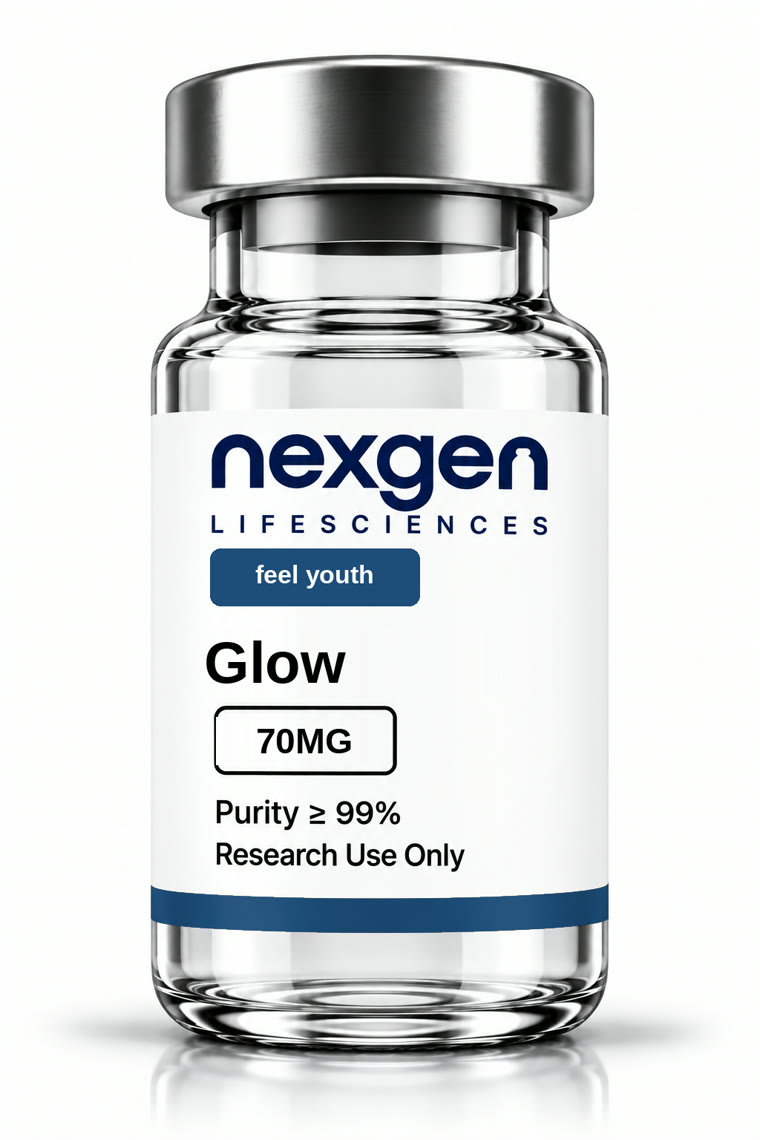
GLOW
Three repair peptides in one vial, each working a different layer of healing, with the emphasis on skin.
- Evidence
- DCommunity use what's this?
Grade D for the combination. Each component carries its own grade (GHK-Cu B, BPC-157 E, TB-500 E). - Also known as
- GHK-Cu 50 mg + BPC-157 10 mg + TB-500 10 mg (70 mg vial)
- Class
- Community repair-and-skin blend, 5:1:1 GHK-Cu-dominant. No trials of the blend itself.
What it is
GLOW combines three of this guide’s repair peptides, usually pre-blended at five parts GHK-Cu to one part each of BPC-157 and TB-500. That ratio makes it GHK-Cu-dominant, so it leans toward skin and tissue quality more than heavy injury repair. Full pharmacology is in each chapter: BPC-157 (08), TB-500 (09), GHK-Cu (17). KLOW (20) adds KPV to this base.
Why the three combine
What the evidence supports
There are no trials of GLOW itself. The skin claims rest mainly on GHK-Cu’s placebo-controlled topical data. The recovery claims rest on BPC-157 and TB-500 animal work. The specific combination is community practice.
Evidence at a glance
| Use | Grade | Best evidence | Main gap | Read |
|---|---|---|---|---|
| Skin and anti-ageing | DCommunity use | Driven by GHK-Cu (topical human data) | Blend untested | Best-supported use |
| Soft-tissue recovery | DCommunity use | BPC-157 + TB-500 animal data | No human trials | Plausible |
| Post-surgical healing, scarring | DCommunity use | Community reports | No trial | Plausible |
Dosing: what has been reported
| Setting | Figure | Route | Grade |
|---|---|---|---|
| Pre-blend 5:1:1 | 900–1,800 mcg total blend per dose; start low | Subcutaneous | D |
| Frequency | Daily for skin; 3–5× weekly for repair; 4–8 weeks on, similar time off | — | D |
| Separate vials | BPC-157 200–500 mcg/day; TB-500 2–2.5 mg/week; GHK-Cu per its chapter | Subcutaneous | D |
A common mix is 70 mg in 3 mL of bacteriostatic water. Daily dosing of the pre-blend delivers about 330 mcg of TB-500 per dose, which matches TB-500’s maintenance range. Use separate vials to push one component, for example more TB-500 for a real injury.
Preparing & storing
Reconstitute with bacteriostatic water, refrigerate, protect from light and don’t shake. The blue tint comes from the copper in GHK-Cu and is normal.
Reported side effects
- Injection-site reactions (most common)
- Brief tiredness after injection (TB-500)
- Copper ceiling: GHK-Cu’s copper sets the practical upper dose
Who should avoid it
- Active or suspected cancer: all three promote vessel growth or cell proliferation
- Pregnancy and breastfeeding
- Wilson’s disease or other copper disorders
- Tested athletes: contains BPC-157 and TB-500, both WADA prohibited
Regulatory status checked Oct 2026
| Body | Status | Detail |
|---|---|---|
| BPC-157 | Not approved | WADA prohibited (S0). |
| TB-500 | Not approved | WADA prohibited (S2). |
| GHK-Cu | Cosmetic ingredient | Not named by WADA. |
| GLOW blend | Not approved | Banned for tested athletes as a whole. |
A rational blend, strongest on skin
GLOW pairs three repair mechanisms that make sense together. Its best evidence comes from the GHK-Cu skin work. Cycle it, respect the copper ceiling and keep it away from any cancer history.
References
- See component chapters: BPC-157 (08), TB-500 (09), GHK-Cu (17). No trials of the combination exist.