
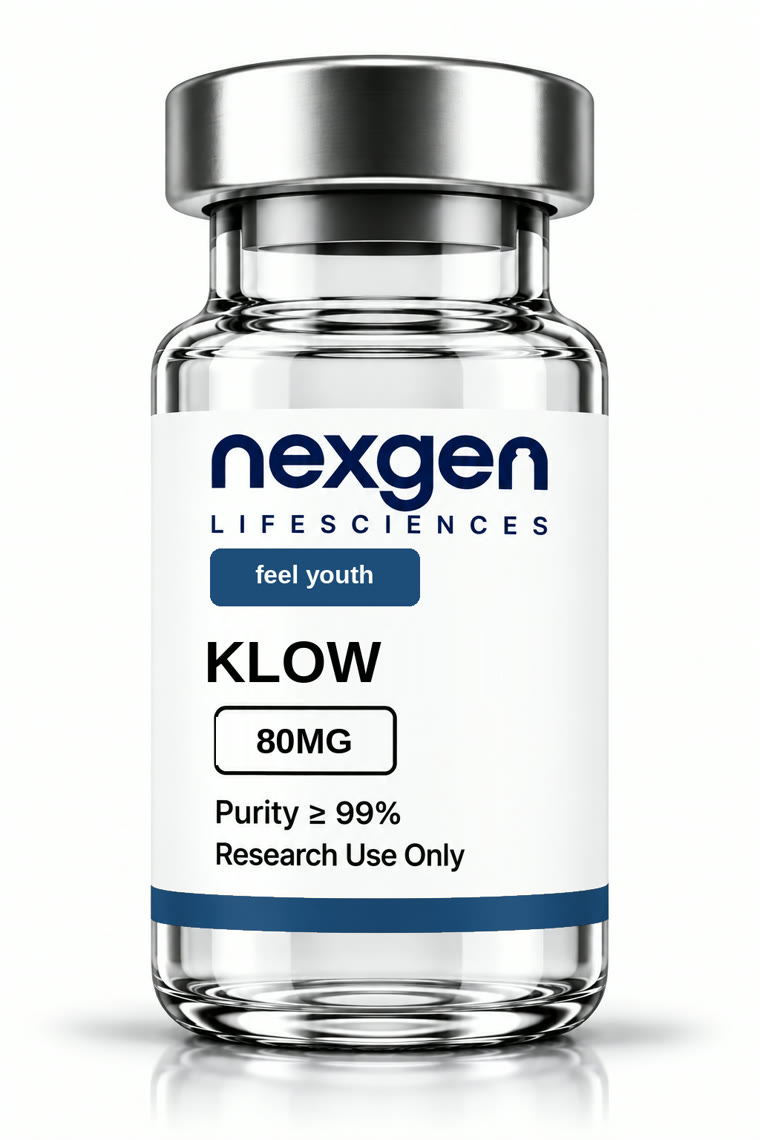
KLOW
GLOW plus an anti-inflammatory arm. It calms inflammation so the repair peptides work in a cleaner setting.
- Evidence
- DCommunity use what's this?
Grade D for the combination. Components range from B (GHK-Cu topical) to E. - Also known as
- GHK-Cu 50 mg + BPC-157 10 mg + TB-500 10 mg + KPV 10 mg (80 mg vial)
- Class
- Community four-peptide repair blend, 5:1:1:1. No trials of the blend itself.
What it is
Chronic inflammation can blunt tissue repair. KLOW adds KPV (16) to the GLOW base of GHK-Cu (17), BPC-157 (08) and TB-500 (09), aiming to quiet that background noise. BPC-157 and KPV both support the intestinal lining, which makes KLOW a common choice when gut inflammation sits alongside skin or joint issues.
Four pathways at once
Evidence at a glance
| Use | Grade | Best evidence | Main gap | Read |
|---|---|---|---|---|
| Skin and anti-ageing | DCommunity use | GHK-Cu (B) + KPV skin models (E) | Blend untested | Supportive |
| Gut inflammation | DCommunity use | BPC-157 + KPV gut mechanisms (E) | No human trials | Standout use |
| Soft-tissue recovery | DCommunity use | BPC-157 + TB-500 animal data | No human trials | Plausible |
Dosing: what has been reported
| Setting | Figure | Route | Grade |
|---|---|---|---|
| Start | ~2 mg total blend daily (10 units of a 20 mg/mL mix) | Subcutaneous | D |
| Working range | 2.7–8 mg total daily, increased to response | Subcutaneous | D |
| Maintenance | ~3 mg total daily; cycles of 8–12 weeks | Subcutaneous | D |
The 80 mg vial is commonly mixed in 4 mL of bacteriostatic water (20 mg/mL). A 2 mg dose delivers about 1.25 mg GHK-Cu and 250 mcg each of BPC-157, TB-500 and KPV. The ratio is fixed, so use separate vials if you want to push one peptide.
Preparing & storing
Refrigerate once mixed, protect from light and don’t shake. Some suppliers advise colder storage for four-peptide blends, so follow the product guidance. A blue tint is normal.
Reported side effects
- Injection-site reactions (most common)
- Brief post-injection tiredness (TB-500)
- Copper ceiling from GHK-Cu limits how high the dose can go
- KPV adds very little risk; the profile is close to GLOW’s
Who should avoid it
- Active or suspected cancer (BPC-157 and TB-500 are pro-angiogenic)
- Pregnancy and breastfeeding; copper disorders
- Autoimmune disease or immune-modulating drugs: get clinical input
- Tested athletes: contains WADA-prohibited BPC-157 and TB-500
Regulatory status checked Oct 2026
| Body | Status | Detail |
|---|---|---|
| BPC-157 / TB-500 | Not approved | Both WADA prohibited. |
| GHK-Cu | Cosmetic ingredient | Not named by WADA. |
| KPV | Not approved | Not named by WADA. |
| KLOW blend | Not approved | Banned for tested athletes as a whole. |
The most complete repair blend on paper
KLOW adds real anti-inflammatory coverage to GLOW, which makes the most sense when the gut is involved. Like GLOW, the blend is used on community experience, so cycle it and screen for cancer risk first.
References
- See component chapters: BPC-157 (08), TB-500 (09), KPV (16), GHK-Cu (17), and GLOW (19). No trials of the combination exist.