
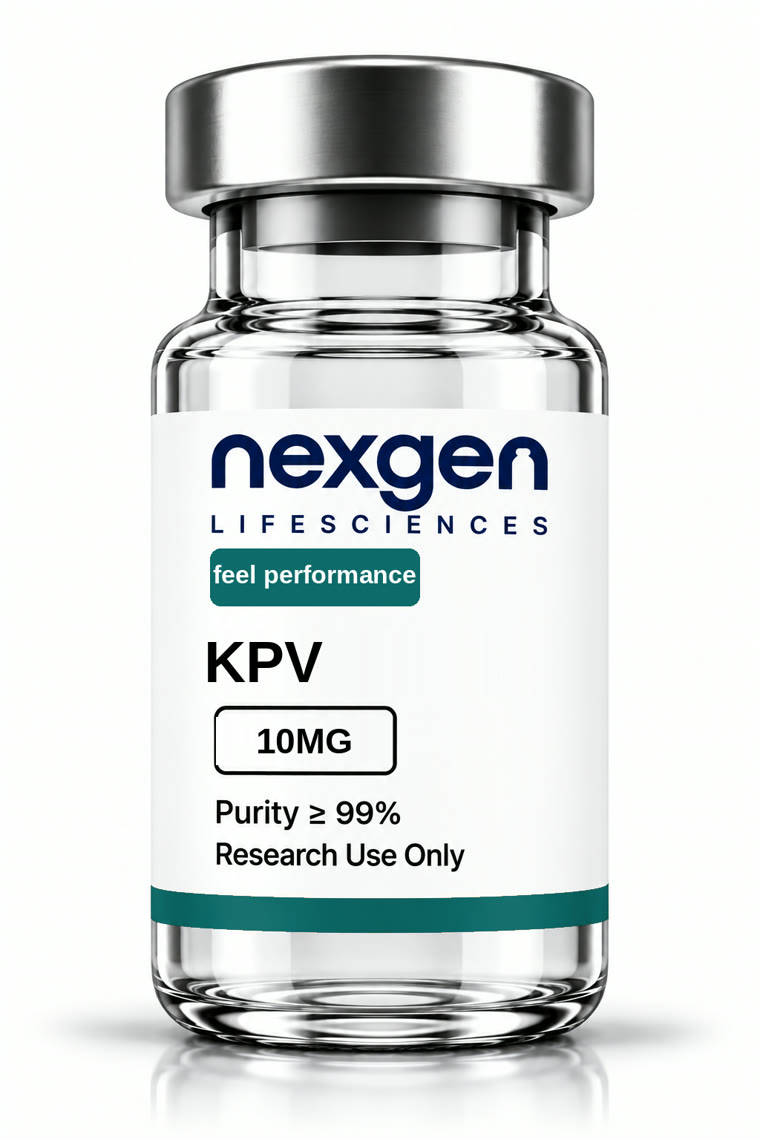
KPV
Three amino acids that carry nearly all of α-MSH’s anti-inflammatory power, and unusually for a peptide, it works by mouth.
- Evidence
- ELab & animal what's this?
Grade E. Consistent animal data, especially for gut inflammation; limited human data. - Also known as
- Lys-Pro-Val · KPV tripeptide
- Class
- Synthetic tripeptide, the C-terminal end of α-MSH
What it is
α-MSH is a natural hormone involved in pigmentation, appetite and immune signalling. In the 1980s and ’90s researchers found its anti-inflammatory effect sits almost entirely in its last three amino acids, Lys-Pro-Val. On its own, KPV calmed inflammation in mice about as well as a corticosteroid. It avoids the melanocortin receptors that melanotan peptides use, so it doesn’t tan the skin. KPV is the anti-inflammatory ingredient that turns GLOW into KLOW.
How it works
Proline and valine resist digestive enzymes, and PepT1 carries it across the gut wall, so oral KPV can reach the intestine intact. That makes oral dosing a real option for gut use.
What the research shows
In animals: in colitis and IBD models, KPV cut intestinal inflammation substantially (roughly in half in some studies), protected the mucosal barrier and sped healing of damaged lining. PepT1 uptake was clearly demonstrated2. It also calmed eczema, psoriasis and dermatitis models. The broader α-MSH tripeptide literature is consistent1,3. In people: limited. Human use rests on this preclinical base and community experience.
Evidence at a glance
| Use | Grade | Best evidence | Main gap | Read |
|---|---|---|---|---|
| Gut inflammation, IBD | ELab & animal | Inflammation cut, barrier protected2 | No human trials | Strong preclinical |
| Mechanism | ELab & animal | Blocks NF-κB; lowers TNF, IL-61,3 | Cell level | Well mapped |
| Skin inflammation | ELab & animal | Calmed eczema and psoriasis models | Animal | Supportive |
| Human outcomes | DCommunity use | Reported gut and skin benefit | No RCT | Promising |
Dosing: what has been reported
| Setting | Figure | Route | Grade |
|---|---|---|---|
| Published human | No established dose | — | — |
| Community, gut | 200–500 mcg/day, often enteric-coated capsules | Oral | D |
| Community, systemic | 200–500 mcg/day | Subcutaneous | D |
| Community, skin | Per formulation, daily | Topical | D |
Match the route to the target. Some people go up to 1,000 mcg a day, but there’s no better support for that than for the standard range. Courses usually run several weeks.
Preparing & storing
For injection, reconstitute with bacteriostatic water and refrigerate. It’s small and enzyme-resistant, so it’s relatively stable.
Reported side effects
- Most users report little or nothing
- Mild injection-site redness
- Occasional digestive upset with oral use
- Rare mild headache or fatigue
- No pigmentation change
Symptom tracking is the main read. hs-CRP or faecal calprotectin can add an objective measure for gut use.
Who should avoid it
- Pregnancy and breastfeeding
- Active serious infection: get medical input first
- Never as a replacement for prescribed IBD or skin treatment
Regulatory status checked Oct 2026
| Body | Status | Detail |
|---|---|---|
| FDA (US) | Not approved | Under compounding review in 2026; research use only. |
| EMA (EU) | Not approved | No marketing authorisation. |
| CDSCO (India) | Not approved | No approval identified. |
| WADA | Not named | Low doping relevance; S0 could apply to an unapproved injectable. |
The quiet anti-inflammatory
KPV is one of the best-tolerated peptides in this guide, and its oral route makes it unusually practical for the gut. Treat it as support alongside proper care, not as a cure.
References
- Brzoska T, Luger TA, Maaser C, et al. α-MSH and related tripeptides: anti-inflammatory and protective effects. Endocr Rev. 2008;29(5):581–602.
- Dalmasso G, Charrier-Hisamuddin L, Nguyen HTT, et al. PepT1-mediated tripeptide KPV uptake reduces intestinal inflammation. Gastroenterology. 2008;134(1):166–178.
- Catania A, Rajora N, Capsoni F, et al. α-MSH has specific receptors on neutrophils and reduces chemotaxis in vitro. Peptides. 1996;17(4):675–679.