NAD+
One of the most fundamental molecules in biology. It falls by about half between your 20s and 50s.
- Evidence
- BHuman trials what's this?
Grade A biochemistry, Grade B that precursors and IV raise levels, Grade D for injected outcomes. - Also known as
- Nicotinamide adenine dinucleotide
- Class
- Naturally occurring coenzyme; energy metabolism and sirtuin cofactor. Not a peptide.
What it is
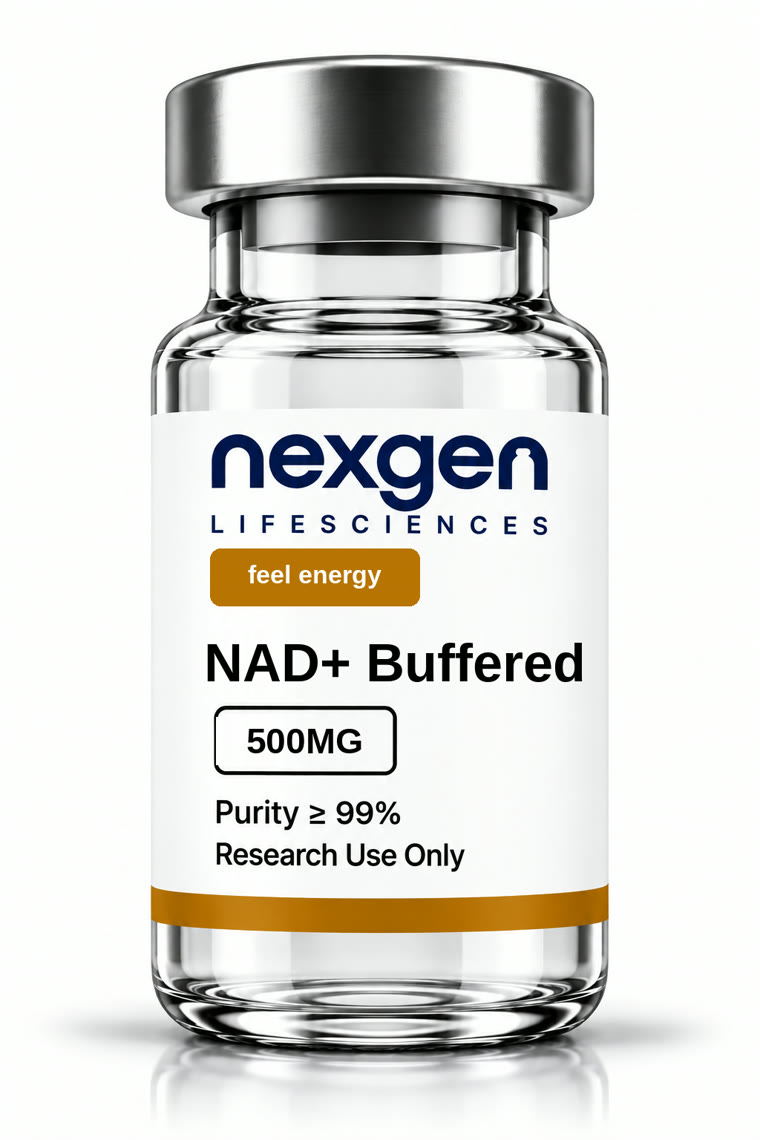
NAD+ is a helper molecule in every living cell, not a peptide, though it’s injected the same way and for similar goals. Levels drop by roughly half between your 20s and 50s, partly because a consuming enzyme called CD38 rises with age. That decline tracks much of what we call ageing, which is why restoring it is so appealing.
How it works
What the research shows
Tier 1, the biochemistry: textbook and undisputed1. Tier 2, raising levels: nicotinamide riboside (NR) at 1,000 mg/day safely raised NAD+ in older adults1. NMN at 250 mg/day raised NAD+ metabolites and improved muscle insulin sensitivity in prediabetic women2. A single 750 mg IV infusion raised blood NAD+ several-fold3. Tier 3, injected outcomes: energy, longevity and recovery benefits from injection are largely unproven in controlled trials and rest on clinic experience. Restoring NAD+ reversed ageing biomarkers in animals.
Evidence at a glance
| Use | Grade | Best evidence | Main gap | Read |
|---|---|---|---|---|
| Biochemistry | AApproved | Central to energy, repair and sirtuins | — | Undisputed |
| Precursors raise NAD+ | BHuman trials | NR and NMN raise levels; some benefit1,2 | Oral, not injected | Solid |
| IV raises NAD+ | BHuman trials | Several-fold rise3 | PK, not outcomes | Levels rise |
| Injected energy, longevity | DCommunity use | Clinic reports | No outcome trial | Largely subjective |
Dosing: what has been reported
| Setting | Figure | Route | Grade |
|---|---|---|---|
| IV (clinic) | 250–1,000 mg over 2–8 h; loading 250–500 mg/day for 3–5 days | IV infusion | C |
| Clinic injection | 50–200 mg per injection, daily to several times weekly | SC / IM | D |
| Community, home | 25–100 mg, daily to 2–3× weekly, in the morning | Subcutaneous | D |
| Oral precursors (comparison) | NR 300–1,000 mg/day; NMN 250–500 mg/day1,2 | Oral | B |
Subcutaneous dosing gives steadier levels than IV peaks, which may suit sirtuins and PARPs better. Take it in the morning, because it’s energising.
Preparing & storing
NAD+ is relatively delicate and light-sensitive. Refrigerate once mixed, keep it in the dark and don’t shake it. Inject slowly, because it stings.
Reported side effects
- Injection-site stinging or burning, often 5–15 minutes (the signature effect)
- IV: chest tightness, flushing, nausea or cramping if infused too fast. These depend on the rate, not allergy.
- Mild flushing, redness or bruising
- Occasional GI upset; poor sleep if taken late
People who were genuinely depleted often notice energy and clarity within days. Healthy young people may notice little.
Who should avoid it
- Active cancer without oncologist input: NAD+ fuels all fast-dividing cells
- Pregnancy and breastfeeding
- IV protocols should be supervised
Regulatory status checked Oct 2026
| Body | Status | Detail |
|---|---|---|
| FDA (US) | Not approved as therapy | Sold as supplement or compounded. |
| EMA (EU) | Not approved as therapy | Supplements available. |
| CDSCO (India) | Not approved as therapy | Supplements available. |
| WADA | Not prohibited | IV infusions over 100 mL per 12 h breach the infusion rule. |
Sound biology, unproven payoff
NAD+ is one of the safest compounds in this guide, and its rationale is as strong as any. Whether injecting it delivers more than precursors do, or anything measurable beyond feeling better, hasn’t been shown. It helps most when you’re actually depleted.
References
- Martens CR, Denman BA, Mazzo MR, et al. Chronic nicotinamide riboside supplementation elevates NAD+ in healthy middle-aged and older adults. Nat Commun. 2018;9(1):1286.
- Yoshino M, Yoshino J, Kayser BD, et al. Nicotinamide mononucleotide increases muscle insulin sensitivity in prediabetic women. Science. 2021;372(6547):1224–1229.
- Grant R, Berg J, Mestayer R, et al. Changes in the human plasma and urine NAD+ metabolome during a 6-hour IV infusion of NAD+. Front Aging Neurosci. 2019;11:257.